
What Happens When a Perio Diagnosis Goes Undocumented
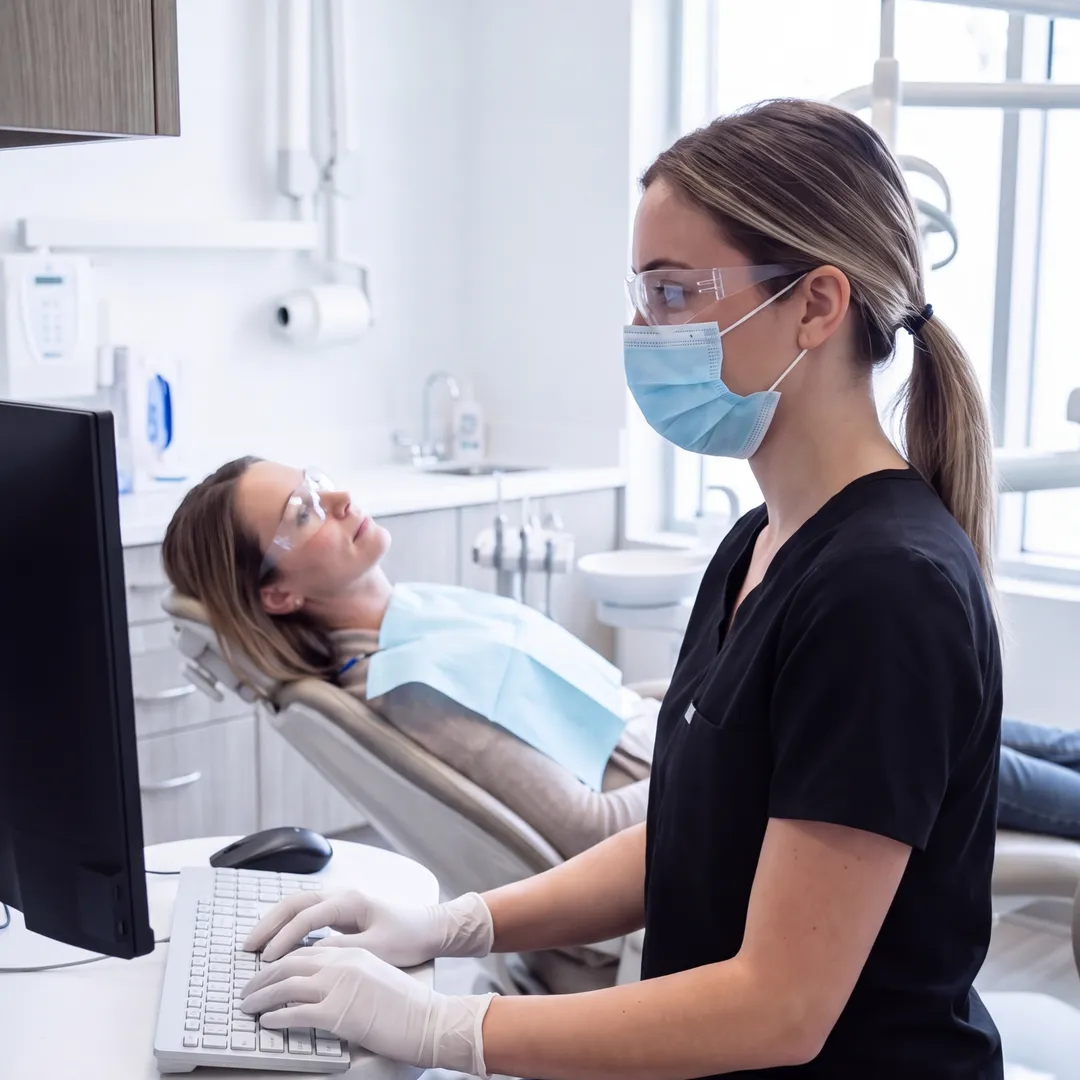
The hygienist is twelve minutes behind, so she skips the full chart and spot-probes the molars. She finds 5mm pockets, and they bleed. At the exam the dentist agrees it looks like early periodontitis and says they will go over it next visit, when there is time to explain it properly. They tell the patient to floss more.
The note comes from the practice's recall template, and it looks complete: medical history reviewed, four bitewings, adult prophy, fluoride, home care reviewed. One line covers the gums: "Generalized bleeding. Will monitor."
Nothing in that note says periodontitis. Nothing says 5mm, or which teeth. The findings were real, and two clinicians saw them. But the diagnosis lives in one place, which is their memory.
Here is what happens to it next.
Six months later, someone else opens the chart
The hygienist may be working a different column that day. She may have moved to a practice closer to home. Either way, the next person to see this patient may not be the person who saw him last.
The second hygienist probes and counts 32 bleeding sites. Is that good news or bad news?
Sandi Synstad, RDH, makes this point in her session on perio charting: 32 bleeding sites means one thing after 87, and something very different after 4. The number only means something next to the one before it.
This chart has no number before it, and no diagnosis in words. So the second hygienist cannot tell whether the patient is improving, holding steady, or getting worse. She starts from zero with a patient who has been coming to the practice for years.
The patient never really hears it
The plan was to explain it at the next visit. But the people who made that plan may not be in the room next time, and the note does not mention it. So the conversation never happens.
From the patient's side the story is simple. Someone told me to floss more, and nobody brought it up again. Most people decide it was not serious.
Even a diagnosis that is said out loud needs repeating. Patients forget 40 to 80% of what a clinician tells them almost right away. That figure comes from a review in the Journal of the Royal Society of Medicine, and we covered it in why patients leave without understanding their perio diagnosis. Repetition is what fixes that, and repetition depends on the record.
When a clinician does name the disease two years later, the patient asks a fair question: why is this the first I am hearing about it?
The disease cannot be graded on its best evidence
The current classification, from the 2017 World Workshop, gives every case of periodontitis a stage and a grade. The stage says how severe the disease is today. The grade says how fast it is moving, and how likely it is to keep moving.
The preferred evidence for the grade is direct: bone loss or attachment loss measured over five years. No loss in that time points to grade A. Less than 2mm points to grade B. Two millimeters or more points to grade C. Smoking and diabetes can push the grade higher.
That comparison needs a recorded starting point. Without one, the clinician falls back on indirect evidence, such as bone loss compared with the patient's age. The classification allows this, but as the substitute for when the record is missing. We covered the full calculation in why staging and grading is so difficult.
So the cost is larger than one visit's worth of information. The missing entry was also the baseline that every later visit would have been measured against.
What gets billed follows what gets recorded
A visit recorded as a prophy gets billed as a prophy. If the record never says periodontitis, a patient with active disease gets a routine cleaning every six months, and the practice bills for one.
When the practice does recommend scaling and root planing, the payer asks for the record. The ADA's coding guidance for D4341 and D4342 says that reporting more than two quadrants in one visit will usually bring a request for more information. The list is full-mouth periodontal charting, full-mouth radiographs, the periodontal diagnosis, and the treatment plan. Each item on that list is something that note left out.
The same holds after treatment. Periodontal maintenance (D4910) is defined as care that follows periodontal therapy, so the claim rests on a documented history of disease and treatment. Our free ebook Prosper with Perio has a chapter on the coding and the narrative that go with these claims.
How common this is
Researchers ran this test at four dental institutions: three dental schools and one large group practice. For every patient who had an exam that year, an automated check looked in the electronic record for three things: a comprehensive perio chart, the main risk factors, and a periodontal diagnosis.
At one institution in 2018, about 70% of the 13,146 patients had the comprehensive chart. About 38% had a periodontal diagnosis on record. Counting only the records that held all three, the four sites scored 20%, 1%, 22%, and 99%. The authors reported that the largest gaps were the diagnosis itself and home-care compliance. The study appeared in BMC Oral Health in 2021.
Two things stand out. The numbers reach the chart more often than the conclusion does. And one site scored 99%, so a complete record is possible in a working clinic.
Our own survey shows where the gap starts. For The State of the Hygiene Appointment 2026 we asked 102 dentists, hygienists, and office managers what gets cut first when the schedule runs behind. Sixty percent said full-mouth perio charting.
The same survey found a confidence gap. Among dentists and owners, 72% said they were very confident their hygiene appointments meet best-practice standards. Among hygienists, 29% said the same. The people holding the probe know what is getting skipped.
What a documented diagnosis looks like
It has five parts, and each one is short.
The full chart, dated. Probing depths, gingival margin or recession, bleeding on probing, furcation involvement, and mobility. Depth plus recession gives clinical attachment loss, which is what staging runs on. The American Academy of Periodontology recommends a comprehensive periodontal evaluation for every adult, every year.
The radiographs you read. Note the date and what they show. Bone loss is part of the stage.
The risk factors. Tobacco use and diabetes status both change the grade, so they belong in the same entry.
The diagnosis in words. "Periodontitis, generalized, stage II, grade B" is a diagnosis. A column of fours and fives is a finding. In most states the dentist makes the diagnosis, and the entry should say so. The next clinician, the payer, and the patient all need the words.
What the patient was told, and what they decided. What you explained, what you recommended, and the patient's answer. If they declined, write that down too. We covered that entry in do your notes tell the whole story, and our free ebook How to Write Clinical Notes that Protect Your Practice has sample wording for declined treatment.
Here is the visit from the top of this article, charted in full and written down. The full chart changes the first read: what looked like early disease at a glance stages as moderate. With this entry in the record, the second hygienist's 32 bleeding sites would also have meant something: down from 41.
Where Alta Voice fits
All five parts depend on the same thing: time inside the appointment. When the schedule slips, the record is what gets cut.
Alta Voice Perio charts the exam by voice. The hygienist calls out probing depths, gingival margins, bleeding points, furcation involvement, and mobility while both hands stay with the patient. The chart fills in as she speaks. Attachment loss is worked out for her, and the bleeding sites are counted. Practices report up to 60% less time spent charting.
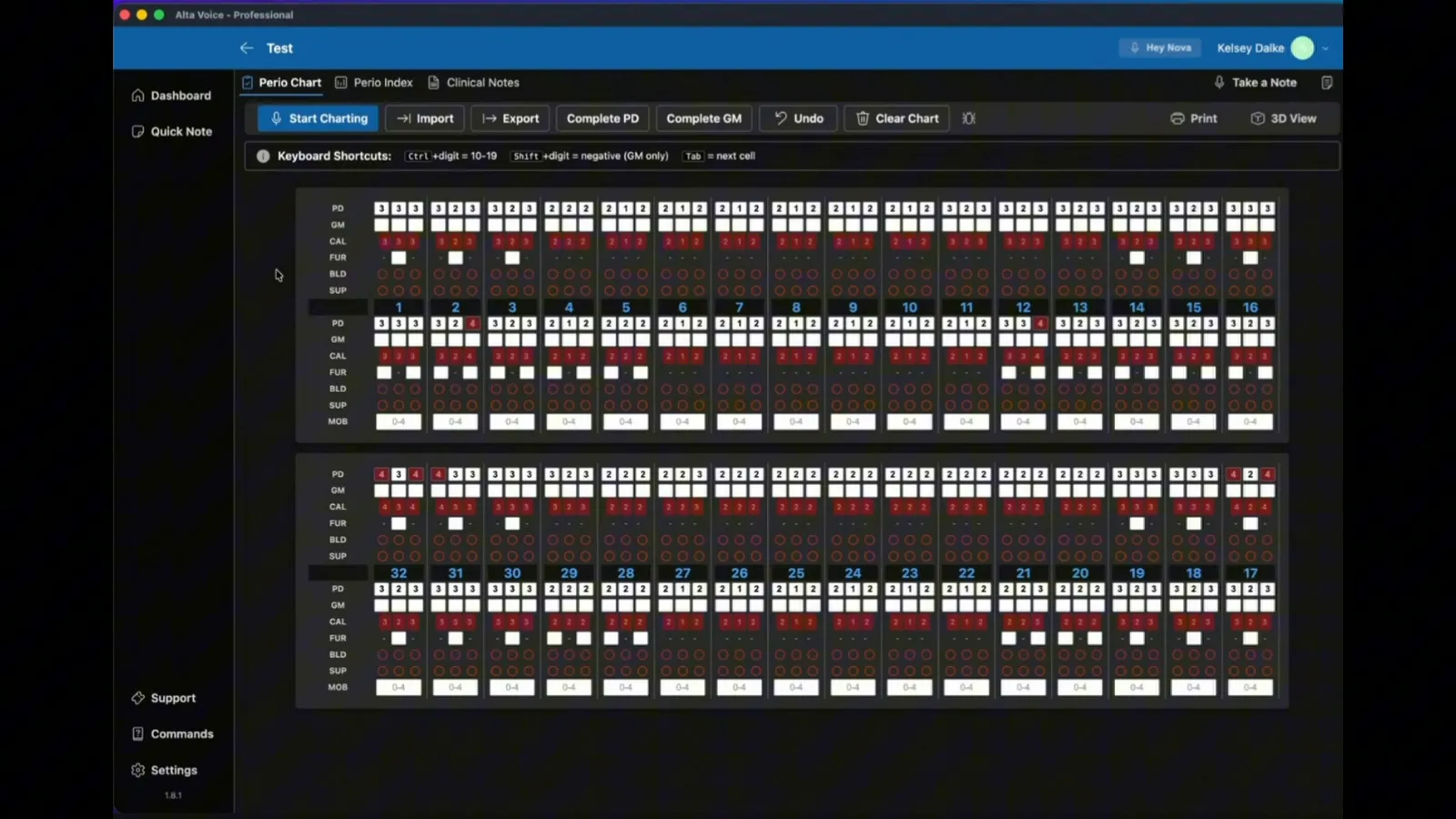
The Alta Voice patient report then calculates a stage and a grade from those numbers, following the AAP guidelines, for the dentist to review. The diagnosis starts out in words.
Alta Notes handles the rest of the entry. It drafts the clinical note from the conversation in the room. When a practice uses both products, the perio chart and the Perio Index can be selected as sources for the note. The clinician reviews the draft, edits it, and copies the finished note into the practice software.
The diagnosis, the conversation, and the patient's decision go into the record while the visit is still fresh. To see it with your own format, bring a sample note with the patient details removed to a free demo.
Try this at your next huddle
Pull five charts for patients you know have periodontal disease. Score each one out of five: a full perio chart from the past 12 months, the radiographs noted, the risk factors, the diagnosis in words, and a line on what the patient was told.
Add up the scores. Twenty-five is a complete set of records. Whatever you get, you will see which of the five parts your practice drops first.
Free resources for the next step
Two ebooks and a webinar for the people who chart, diagnose, and write the notes.
Want to see a full perio exam charted by voice, and the note drafted from the conversation? Book a free demo of Alta Voice.