AI Can't Replace These Hands
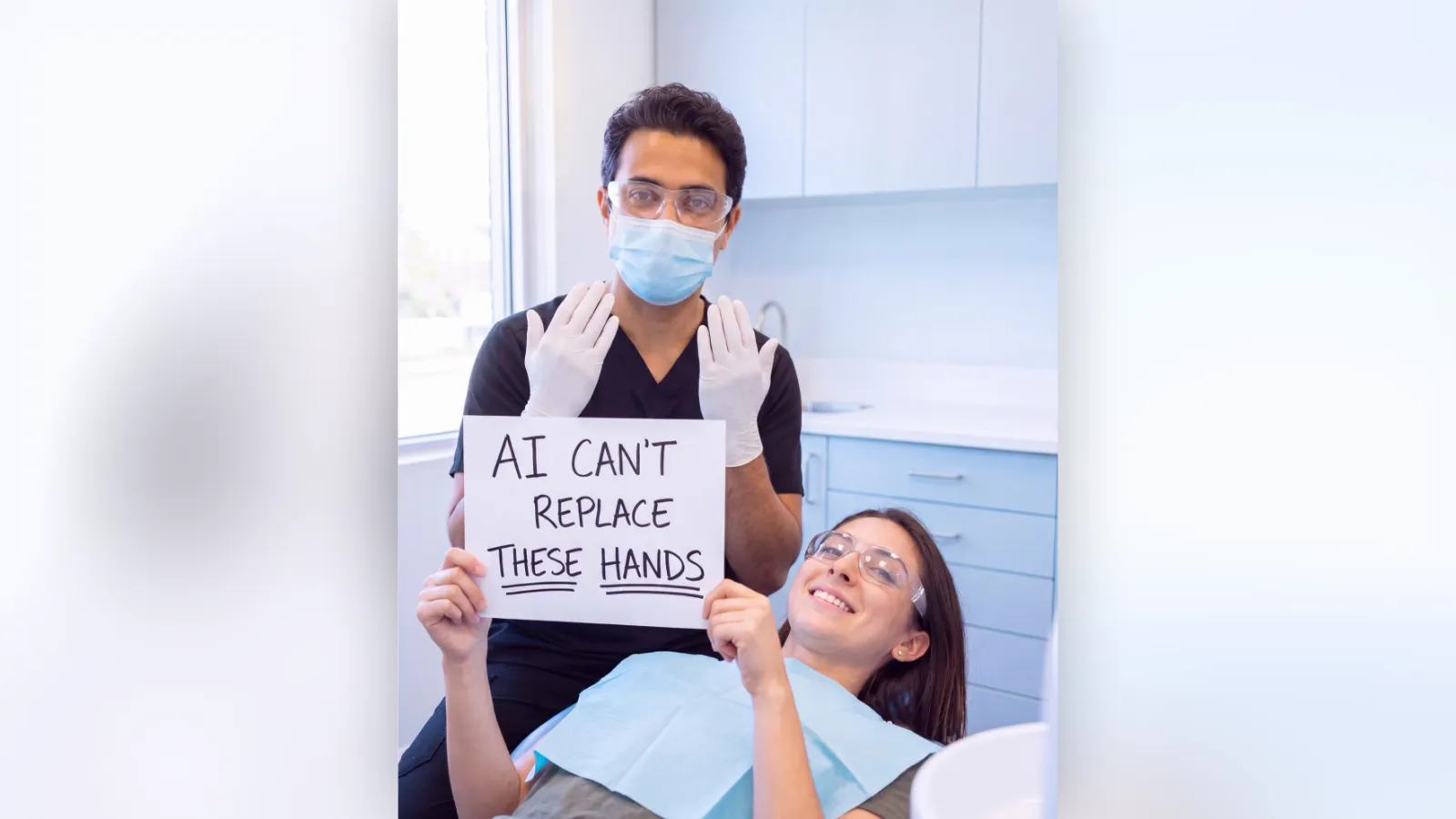
AI can't replace these hands.
They probe. They scale. They restore a tooth and steady a nervous patient. No software does that, and none is close.
But AI can take the work that pulls those hands away from the patient. And it should do that work better than a busy day allows.
But it can chart the full mouth
A full perio chart is six sites on every tooth, plus bleeding, recession, mobility and furcation. That is a lot to record with both hands busy.
In Alta Voice's 2026 survey of 102 dental professionals, 60% said full-mouth perio charting is the first task cut when the schedule runs behind. The full survey has the rest.
Give that job to AI. Your hygienist calls out the numbers the way they would say them to an assistant, and the chart fills in. If a number is wrong, they say it again and it's fixed. Both hands stay on the patient.
But it can write the note
A good note says what you found, what you told the patient and why you treated. Writing it well takes time that most appointments don't have, so done wins over perfect.
Give that job to AI too. Talk through the visit the way you always do. The note is drafted in your format, with your headings and your level of detail.
One dentist described his day this way:
"Appointment ends, I generate the note, then I leave right at the end of the day. The best."
Mark Floumanhaft, Dentist, Plattsburgh Dental
But it can show patients what you found
A row of pocket depths means little to a patient. A 3D view of their own mouth and a plain-language report make the exam something they can see. Practices using the 3D Perio Index report up to a 40% increase in SRP case acceptance.
It should do these jobs better, not only faster
Charting and notes were never your first priority. The patient is. So the record gets whatever time is left.
AI doesn't have that problem. It can capture every site and every detail you say out loud, at every visit. That is the standard to hold it to: a more complete, more consistent record than anyone has time to write by hand.
There is one more reason to expect better. The reader of your notes is changing. The National Association of Dental Plans describes payer AI that checks claim documentation and flags claims for clinical review, including claims likely to result in denials. Its example is a vendor-sponsored webinar description, not an independent study of denial rates, and it does not show that every insurer works this way. Still, if software may read the note before a person does, it makes sense to have software help write it. Our article on claim narratives and clinical notes has more.
A tool you put to work
AI is not something to worship or to fear. It is a tool, and you are the clinician.
- You give it the job.
- You read the chart and the note, and change what you want.
- You approve them. Nothing goes into the patient chart until you say so.
The hands, the judgment and the record are still yours.
See it work
The quickest way to judge it is to watch it. In an Alta Voice demo you can see a perio chart fill in by voice and a clinical note drafted from the visit. Bring the note format you use today and the name of your practice software.