
Your Patient Left Without Treatment. But Do Your Notes Tell the Whole Story?
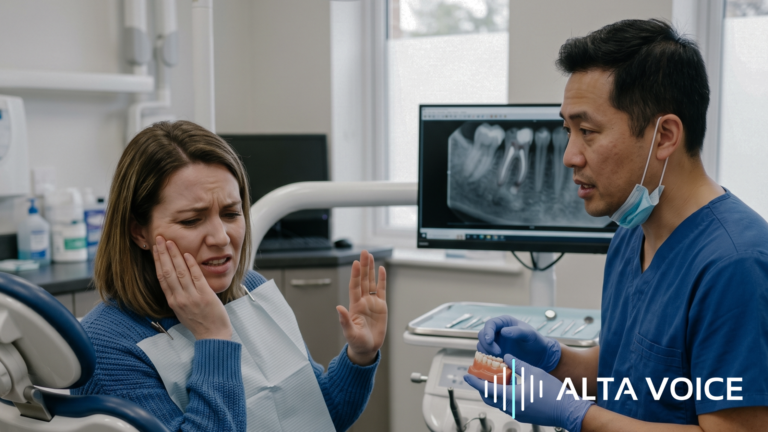
Every dental provider has been there. You present a treatment plan, clearly explain what needs to be done and why, but the patient declines. Maybe it’s the cost. Maybe it’s fear. Maybe they just don’t think it’s urgent. You move on, schedule the next hygiene visit, and life continues — but do your notes tell that whole story?
Months or years later, that same patient returns — and the problem is worse. Now they’re in pain, facing more extensive (and expensive) treatment, and they want someone to blame. Without the right documentation in place, that someone could easily be you.
The Silent Risk Hiding in Plain Sight
Refused treatment happens constantly in dental practices. It’s a normal part of patient care. But what most practices don’t realize is that a treatment refusal, undocumented, is a liability bomb waiting to go off.
When a patient declines recommended care and later suffers consequences, the questions that follow are predictable: Did the dentist tell them what could happen? Did the patient understand the risks of inaction? And did anyone write it all down?
The standard of care in dentistry doesn’t just include what you do — it includes what you communicate and what you document. Failing to record a treatment refusal, the condition of the tooth at the time, and the conversation that took place is, from a risk management standpoint, nearly indistinguishable from failing to have the conversation at all.
As risk management expert Linda Harvey put it plainly during a recent Alta Voice webinar on documentation and compliance: “If it’s not documented, it didn’t happen.”
What Should Actually Be in the Chart
When a patient refuses recommended treatment, the documentation needs to tell a clear story to anyone who reads it later — including a dental board investigator or plaintiff attorney. That story should include:
What was diagnosed. Not just “patient has a cavity,” but a specific, clinical description of the finding. Which tooth, what surfaces, how extensive, what the clinical indicators were. Linda Harvey uses the acronym DIP — Diagnosis, Informed, Prognosis — as a framework for building complete notes. The diagnosis piece alone is where most documentation falls short: “We know that doctors are making a diagnosis, but it’s not necessarily getting recorded properly in the record.”
What was presented. The treatment recommendation needs to be clearly spelled out, including why it was recommended. What was the clinical rationale for the crown prep? Why is a periodontal referral being suggested? If the reasoning isn’t documented, it doesn’t exist.
What the patient was told — including the risks of doing nothing. Informed consent isn’t just a signature on a form. It’s a documented process. Patients should be informed of the risks, benefits, alternatives, and results of no care. That last piece — what happens if they say no — is the one most likely to matter later and the one most frequently left out.
What the patient said. The refusal itself needs to be documented clearly. Who said what, when, and what the plan going forward is. “Patient declined treatment, risks of delayed care discussed, patient verbally acknowledged” is far better than silence.
What the tooth looked like at the time. If a patient later claims a tooth went from fine to failing while under your care, your documentation should make the timeline undeniable. Clinical findings at each visit build that picture.
The Prognosis Problem
One of the most overlooked documentation failures around treatment refusal involves prognosis. When a dentist is trying to save a questionable tooth — or explaining that a tooth may eventually need extraction regardless of what treatment is pursued — the prognosis needs to be on record.
Harvey described the scenario clearly: “It’s important that we note that in the record because in the event that it doesn’t turn out the way the doctor hopes it does, we don’t want the patient to be dissatisfied enough that it drives them to file a complaint because now they lost a tooth and they didn’t know they were gonna lose a tooth, and it’s not documented anywhere.”
Documenting prognosis isn’t pessimism — it’s protection. It also gives the patient genuine ownership over their care decisions, which tends to produce better outcomes and fewer surprises.
Why “Standard” Notes Often Fall Short
Many practices rely on templates and SOAP notes, and while those frameworks are useful, they weren’t designed to handle the nuance of a treatment refusal conversation. Templates, in particular, can create a false sense of security.
As Harvey noted, one of the biggest pitfalls in dental recordkeeping is the “copy-paste” note — the same clinical language appearing visit after visit regardless of what actually happened: “Everything is customized… So why do our notes look so templated?”
A compliant note isn’t one that looks complete — it’s one that actually captures the specific, individualized facts of that visit. That means different notes for different patients, different findings, different conversations.
The Bigger Picture: Documentation as Your Defense
Ninety to ninety-five percent of dental board complaints — by Linda Harvey’s conservative estimate — come down to recordkeeping violations rather than actual failures of clinical care. That’s a staggering number. It means the vast majority of providers who find themselves in front of a board or facing legal action made a clinical error they will never be able to prove they didn’t make, because the records weren’t there to defend them.
Treatment refusals sit right at the heart of this problem. They represent a moment when the patient made a choice you disagreed with clinically. If documented properly, they protect you. If left out of the record, they become an open question — and open questions are where liability lives.
Want to hear this discussion in full? Get access here!
A Practical Starting Point
You don’t have to overhaul your entire documentation process overnight. A few targeted changes can make an immediate difference when it comes to refused treatment:
- Make it a standard workflow step. Every treatment refusal should trigger a documentation prompt — not a reminder that might get skipped, but a built-in part of how the visit closes.
- Review recent refusal documentation in your next chart audit. Look for specificity: Is the diagnosis named? Is the patient’s refusal recorded? Are the risks of inaction addressed?
- Train your team on what a complete refusal note looks like. Give them examples, not just policies.
- Consider how technology can help. Tools like Alta Voice are designed to make comprehensive, real-time documentation faster and more consistent — so nothing gets left out, even in a busy clinical day.
The patient who says no today may be back in two years. When they arrive, you want a chart that tells the whole story — not one that leaves you with nothing to say.
The information shared here is for educational purposes only and does not constitute legal, medical, or risk management advice. Documentation practices and liability standards vary by state, specialty, and circumstance. If you have specific concerns about your practice’s documentation, compliance, or risk exposure, we strongly encourage you to consult a qualified dental attorney, malpractice insurance provider, or risk management professional.
AI helped us write this post and Alta Voice’s AI helps dental practices capture comprehensive, defensible documentation at the speed of care. See it for yourself when you request a demo.